
Wankhede Stadium First Innings Scoring Analysis – Powerplay & Full Innings Projection
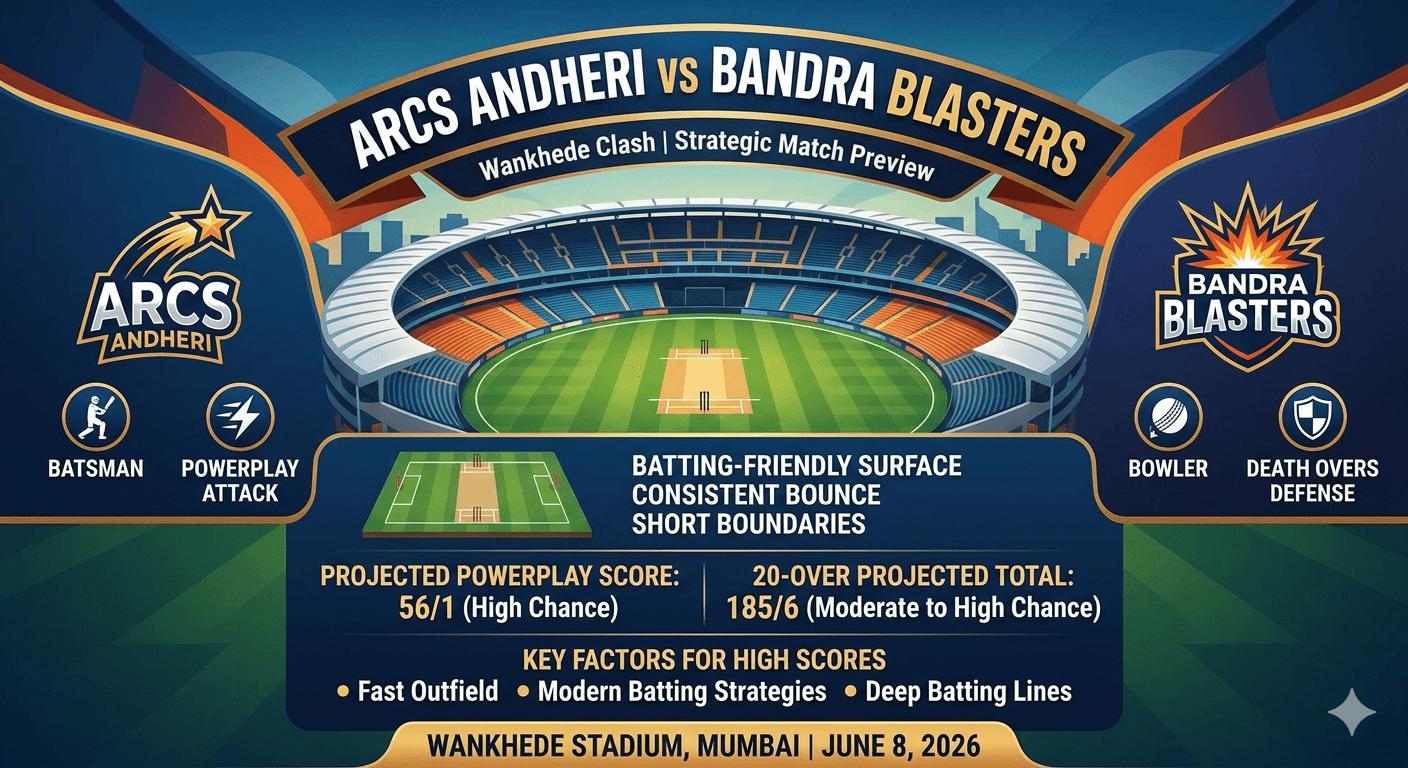
Wankhede Stadium in Mumbai has built a reputation as one of the most batting-friendly venues in world cricket. The combination of true bounce, quick outfield, and relatively short boundaries regularly produces high-scoring contests. Teams arriving at this venue generally look to maximize scoring opportunities from the opening over rather than spending time settling in.
When assessing potential first-innings scores, historical venue behavior, pitch characteristics, batting depth, boundary dimensions, and match tempo all become important factors. Wankhede often rewards positive intent, particularly during the Powerplay when fielding restrictions allow attacking batters to find gaps and clear the infield with ease.
Modern T20 cricket has further increased scoring expectations at this ground. Teams no longer view 160 as a strong total. Instead, many sides approach the innings with the goal of reaching at least 180, while anything above 190 is often viewed as a highly competitive score.
Based on venue trends, scoring patterns, and modern batting approaches, both the Powerplay projection and overall innings projection suggest strong potential for totals exceeding traditional benchmarks.
Powerplay Analysis (1-6 Overs)
The first six overs at Wankhede frequently generate rapid scoring because batters can trust the bounce and play through the line confidently. Unlike slower surfaces where timing becomes difficult, the Mumbai wicket generally allows clean ball striking from the beginning of the innings.
Opening partnerships have become increasingly aggressive in recent seasons. Teams understand that preserving wickets while maintaining a run rate near ten runs per over creates a strong platform for the remainder of the innings. Even when early wickets fall, incoming batters are usually encouraged to continue attacking rather than rebuilding conservatively.
The quick outfield also contributes significantly to Powerplay scoring. Well-timed shots often race to the boundary, reducing the pressure on batters to constantly clear the ropes. This allows teams to accumulate runs through a combination of boundaries and strike rotation.
Fast bowlers can enjoy some early movement under lights, but the advantage often lasts only a short period. Once batters adjust to pace and bounce, run scoring generally accelerates quickly.
Chance of Scoring Above 56 Runs: High
A Powerplay total of 56 runs represents a scoring rate of 9.33 runs per over. At Wankhede, this figure is achievable for batting units possessing aggressive openers and quality support through the top order. If the opening pair survives the first three overs with wickets intact, the probability of exceeding the 56-run mark increases considerably.
Given the venue characteristics and current T20 scoring trends, there is a realistic possibility that teams could reach between 58 and 65 runs during the first six overs when conditions remain favorable.
Middle Overs Assessment (7-15 Overs)
The middle phase often determines whether an innings reaches a competitive score or develops into a dominant total. At Wankhede, batters rarely face extended periods of scoreboard pressure because boundaries remain accessible even after field restrictions are removed.
Teams that enter this phase with only one wicket lost generally possess the freedom to attack spin bowlers. Established batters can use the dimensions of the ground effectively while maintaining scoring momentum.
The ability to rotate strike becomes equally important. Singles and doubles ensure that bowlers cannot settle into consistent rhythms, forcing captains to frequently adjust field placements.
A projected score around 130 to 140 runs after 15 overs would place a batting side in a strong position to launch an aggressive finish during the final phase.
Death Overs Analysis (16-20 Overs)
The closing overs at Wankhede are often among the most productive in international and franchise cricket. Set batters enjoy excellent value for attacking shots, while bowlers must execute yorkers and slower deliveries with precision.
The final five overs frequently produce between 45 and 60 runs, especially when wickets remain available. Teams entering the death overs with six or seven wickets in hand often increase their scoring rate dramatically.
Batters targeting straight boundaries can generate substantial rewards, particularly against pace bowlers missing their lengths. This aggressive approach has contributed to many totals exceeding 180 at the venue.
Chance of Scoring Above 185 Runs: Moderate to High
A total of 185 requires a scoring rate of 9.25 runs per over across the full innings. While challenging, it remains highly achievable on a surface known for rewarding attacking cricket. Teams with strong batting depth and momentum entering the final overs can comfortably exceed this figure.
If the batting side reaches approximately 55-60 runs during the Powerplay and maintains wickets through the middle overs, surpassing 185 becomes a realistic outcome rather than an exceptional performance.
Projected Innings Progression
| Overs | Projected Score |
|---|---|
| 6 Overs | 56/1 |
| 10 Overs | 92/2 |
| 15 Overs | 138/4 |
| 20 Overs | 185/6 |
Key Factors Supporting Higher Scores
- Consistent bounce allows confident stroke play.
- Short boundaries increase boundary frequency.
- Fast outfield converts timing into runs quickly.
- Modern batting strategies encourage Powerplay aggression.
- Deep batting line-ups reduce fear of losing wickets.
- Death overs traditionally produce accelerated scoring.
- Wankhede has a history of successful run chases and large first-innings totals.
Final Assessment
The projected Powerplay score of 56 runs sits comfortably within the expected scoring range for Wankhede Stadium. Given favorable batting conditions, there is a strong possibility that teams can exceed that mark if early wickets are avoided.
Similarly, a first-innings projection of 185 runs aligns with recent scoring expectations at the venue. Teams carrying momentum through the middle overs and preserving wickets for a late surge have a realistic opportunity to finish above the 185-run benchmark.
🔒 FINAL LOCK
6 Overs Score: 56+ Runs Possible
20 Overs Score: 185+ Runs Possible
Venue: Wankhede Stadium, Mumbai
Overall Assessment: Batting-Friendly Conditions With Strong Potential For Above-Par Scoring.